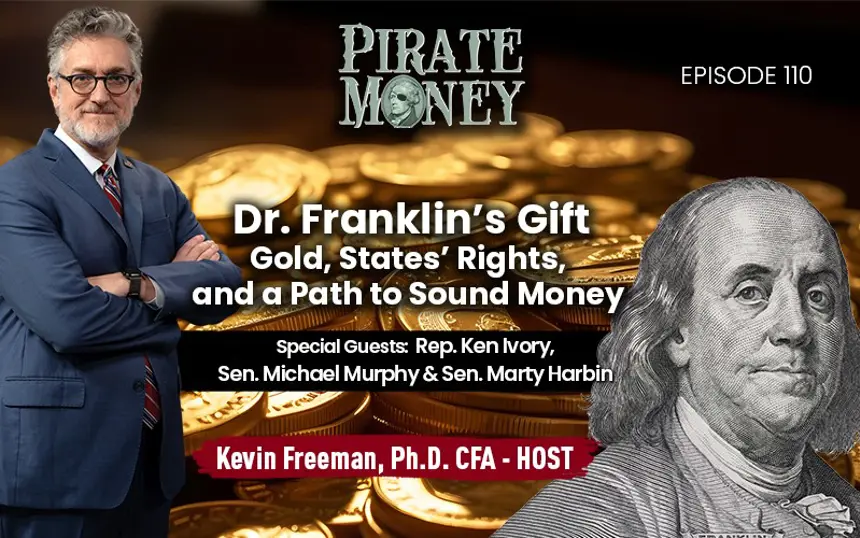
California is considering a wealth tax on multi billionaires
Kevin Freeman: You know, America's at a crossroads moment. I'm not sure people realize we have an avid, outspoken socialist mayor in NewSong York City and California. They're flirting with a wealth tax where they take what you've already earned and already paid taxes on it. I think that sounds like theft. They say it's only for billionaires, but the history of taxation is such that once you let that camel put its nose under your tent, it soon takes up the whole tent. I'll give you an example. Originally, the income tax was a simple one page form. It was to tax only the top 3% of earners. 97% of Americans will never pay tax, they said that are exempt. And if you were among the richest 3%, your top tax rate was 7%. Means if you earned, $100,000, you'd maximum pay $7,000. And that only applied if you earned $500,000 or more. That would be $17 million today in equivalent amount. So you're like, all right, 97% of Americans don't have to pay it. It's only going to be on the top 3% and it's only be a maximum 7%. That's how it was sold. And once you paid it, the rest of the money was supposed to be yours for life. You only had to pay on income. But now California is pushing to make it a tax on wealth and they say it's only going to be on the multi billionaires. Don't worry, it'll never affect you. Look at paying taxes today. The forms are hundreds of pages long, not one page. Top tax rate is 37%, not 7%. And 94% of Americans have to pay something. When they introduced it, they said only 3% of Americans. Now it's 94%. Once government gets going, they grow it. And this is the quote, we'll bring it from Ronald Reagan. The closest thing to eternal life on earth is a government program. And the IRS is about that. The same is true with money. Once government begins the process of debasement, it's not long before money becomes worthless. They do this by printing excess money and borrowing from future generations. The good news? The Constitutional Convention provided an answer in an unusual way. Joining me to discuss this and a modern application is my friend and colleague, co host of Pirate Money Radio, the amazing Mike Carter.
Mike: Great to be back in the studio after all the travel
Welcome, Mike.
Mike Carter: Great to be back in the studio on a regular basis now after all the travel with my good friend and legislators out there, making a difference. It's going to be a fun show today. We got, three great guests. And, we're going to share successes, key learnings, and what's going to happen next year.
Kevin Freeman: It's exciting because these are patriots who want to save America. They don't want America to go down the socialist rat hole. They don't want America to be taxing away its future prosperity. They don't want America to be fumbling it by printing too much money.
The Great Awakening tells a story of America during the 1800s
But, Mike, you told me about a movie. You said it's one of the favorite movies you've ever seen in your life. The Great Awakening.
Mike Carter: Yeah. And I walked in with very low expectations. It's one of those things where your wife sets it up with some friends and it's on a weeknight, and I'm like, oh, it's one of those movies.
Kevin Freeman: And it's a Christian movie.
Mike Carter: They say you gotta see it now because it's only gonna be in the theaters for a few days. I'm like, all right, if I have to, I'll go hun. And I'm sitting there and watching it like, whoa, this is like. This is like what we're living in right now, today. And I was blown away by the end. I walked out like, that might have been the best movie I've ever seen. Especially as it relates to historical significance, spiritual impact, and, just, revelation that it gave me and inspiration.
Kevin Freeman: You were so right. I'm glad I saw it. You know, I had low expectations, but I trust you. So I was like, okay, it's going to be as good as Back to the Future. You know, it was so much better in so many different ways. the Great Awakening tells a story of America, and it starts with Ben Franklin, Dr. Ben Franklin, and how he transforms over time from being literally a deist humanist. Deist humanist means he believes God created, like, the mechanism, the watch, and then starts it running and then walks away and watches to see what we do with it. And a humanist, meaning the human answers to every problem. We can come up with the answer.
Mike Carter: That'd be kind of a boring job if you were God though, right? You just build something and you just watch it. It's kind of like an ant farm or something.
Kevin Freeman: Well, I can't imagine God boring under any circumstances, but. Yeah.
Mike Carter: Well, I don't believe in that theology, but, in that case, all right, let me just see what happens now.
Kevin Freeman: But that's where he was. And so this great preacher comes from England and He comes in as George Whitefield and he meets Jon Wesley. And there's a whole backstory on Jon and Charles Wesley and how he goes from wanting to be an actor to preaching God's word. But he comes to America and Franklin's excited because this guy's apparently selling tickets, so to speak. And Franklin's like, this is going to sell me newspapers. And he's all about the deist humanist is like, I can make money from this.
Mike Carter: The entrepreneurial side of Franklin came very much alive in there. And I enjoyed that part as well.
Kevin Freeman: Yeah. So it told true story. This is the same Ben Franklin, by the way, who is, according to the Fed's own website, the father of American paper money. He literally was. They have a webpage dedicated to it. There's a PDF document that you can see. And of course he's on the hundred dollar bill. I mean he's like the king. We call him Benjamins or. Yeah. So the bottom line is he's the birth of a paper money economy. That's where he was. And he printed the Continental notes, he printed the Articles of Confederation, state based currency. He was absolutely man. He argued against a gold standard. He said we don't need a gold standard, we don't need a silver standard, we don't need that.
Mike Carter: Benjamin Franklin argued against the gold standard.
Kevin Freeman: He did. It was archaic, it was based on the Bible. We don't need that. The deist. God set us up. He wants us to invent paper money. And they did and they invented paper money and it failed.
Mike Carter: It's convenient if you're printing the paper money, I guess.
Ken Ivory: Yes.
Kevin Freeman: He was the printer. He was going to make money off that just like he was off George Whitefield. But the Great Awakening taught him that we need God in government. So much so that at the Constitutional Convention after Whitefield had died, Franklin is there, the elder statesman, the head of the Philadelphia, the Pennsylvania delegation to Congress to the Constitutional Convention. And he's there and he listens to everything. It's falling apart. And he says, you know, if a sparrow cannot fall to the earth without God knowing it, God needs to be involved in this government. He basically said we prayed every day during the Revelation. We prayed every day when we wrote the Declaration. We need to pray now. And he insisted that they begin with prayer and bring God into it and that there was a chaplain and I mean he brought God into government. The least religious founder at the end of his life knew that God had to be in government. But here's the key, this is the, if you watch the movie, you'll see where he's being carted in. You know, he's like, sits in his chair and they carry him in and you'll hear people yelling at him, your money's worthless. And, I, that, that's what caught my attention. The worthlessness of the paper money. Your money's worthless. That he had printed. When he gets in there, guess what happens at the Constitutional Convention. The Pennsylvania delegation votes to eliminate bills of credit and to make nothing but gold and silver coin tender for payment of debts. At the state level. He votes specifically for a gold and silver standard, something he had years before argued against, just like he voted for bringing God into government, something he'd argued for years against.
Mike Carter: Big idea. So because of that, that's where we're at today. Article one, Section ten.
Kevin Freeman: Article one, Section ten. That's pirate money. That's the inspiration of what we're doing. And so not only was he the father of paper money and repented from that, but also he was a supporter of gold and silver standard at the state level in the Constitution. And the Pennsylvania delegation voted in favor of that under his leadership. So I think that, that, that's worth noting. you knew I could find a pirate money thing out of the movie the Great Awakening. I found it.
What progress have we made this year on state-level gold and silver initiatives
And it's backed by history. Even David Barton agrees that that's the truth. That's what happened.
Mike Carter: Great historian. Did you text him or did you talk to him on the phone on that?
Kevin Freeman: I texted Bill Federer, Tim Barton and David Barton, all three great historians, and said, this is what I learned from that. And they all gave me thumbs up. And David Barton said, we need to start teaching that. Wow.
Mike Carter: Well, I'm glad we're first to break it here. Good job.
Kevin Freeman: Uncovering really was revelatory. Now Mike, you've been out there taking that provision. Article 1, Section 10. What progress have we made this in this year's legislative session?
Mike Carter: We've had a lot of seeds planted this year. you know, 20 some states still working it. We've worked through a lot of the back, end administration pieces, helping treasurers and, and people inside of the states to understand, okay, what does this look like? Is there really going to be a fiscal note? How can we possibly do it? There's sometimes a learning curve to get through that. And I think in a lot of these new states, we've been, successful at starting to build through that, but we've saw a lot of fiscal notes that weren't realistic, A lot of misunderstandings still in terms of how this is implemented. But the exciting news is we're going to start to implement this year. We're going to start, in June in Florida. Texas won't be far behind, Arkansas won't be far behind, Louisiana, Missouri. So the process is moving. And so as we continue to work this into the next sessions and other sessions we're still working this year, some go longer than others. We're, in a really exciting position in terms of transactional gold and silver as legal tender at the state level. And I got three great guests, legislators from Utah, from Kansas and from Georgia today, just to talk a little bit more about that.
Kevin Freeman: Yeah, and you got the rule set in Florida. We've got a comptroller candidate in Texas. That looks good. you told me, just recently Louisiana passed something 101 to 0 in the house. So we'll talk about that. And we had two states pass it all the way through. And there are first two guests, Utah pass it all the way through. And then also Kansas passed it all the way through. All right, we're going to cover all this and more when we come back from the break. But I want you to know God's money is real. It's happening now. We're seeing constitutional convictions type stuff happening in America. We'll be right back.
Kevin Freeman: Pirate Money Radio and Patriot Mobile support Pirate Radio
Mike Carter: Welcome back to Pirate Money Radio with your host, Kevan Freeman.
Kevin Freeman: Yeah, we'll be talking about money today. And there are only three things you can do with your money. You can give it, you can spend it, or you can invest it. Here at Pirate Money Radio, we work to explain solutions to problems that support all three areas in a way promoting liberty, security and values. Patriot Mobile, it's a mobile phone company. They support our Pirate Money Radio program. Patriot Mobile uses US carriers, including AT&T, Verizon and T Mobile, and operates on both Apple and Android phones. More information about the economic war room, Pirate Money Radio and Patriot Mobile is available@PirateMoneyRadio.com that's PirateMoneyRadio.com afr and I'm joined by Mike Carter. And Mike, we have a special guest.
Mike Carter: We do, we do. Happy to have, Representative Ken Ivory with us today. Ken has been instrumental in this, ah, he's involved all the way back in the 20,000 love apiece he worked on together, wasn't he?
Kevin Freeman: Oh, he is literally the founder of State Rights, including transactional gold and silver. But gold and silver is legal tender and he's a constitutional attorney. I Mean, the guy is brilliant. He can explain to you what the founders were thinking and talking about at the Constitution convention.
Mike Carter: Yeah. And he's been instrumental not only in gold and what we have here, but the Federalist things, the Federalist papers that he's doing, in terms of working with other legislators across the state, across the United States, to educate them on some of those issues and rally some stuff around gold and not only transactional, but some bond issues. So Ken, we so appreciate, or should I say, Representative Ivory, we so appreciate, the great work that you're doing, the leadership you're doing, the. We've brought you into our summits to share best practices and what you've learned out there. But one of the things I really appreciate about the work you did was the approach you took, not only politically, but through the process, to make sure that we had all the boxes checked. you were instrumental in leading the Utah Precious Metals Study Report. Can you just share a little bit about that and how you came about putting that piece together?
Ken Ivory: Good to see you guys. It's, it's been a spell, but, thanks for all the great work you're doing. yeah, you know, it's Turns out that that was really critical. We kind of thought that, that doing the study along with the investment bill that we did In House Bill 348, you know, that allowed us to invest up to 10% of our rainy day fund in precious metals. And man, as you guys know, we brought people kicking and screaming to the party on that one. And, and I think it's only up about 80%. since we put the investment in about 110 million, we're now sitting close to probably 180 to 200 million M dollars in a little less than a year. but the idea of bringing people together to really study, what are the next steps after just investing. A lot of people think gold is a pet rock and what can you do with it? Well, there's a lot of things happening with it and people forget that prior to 1971, we did banking effectively on a gold standard. We had pieces of paper that represented the gold, but you invested it and got interest and you did transactions and loans and, you know, all sorts of financial deals that were done under a gold standard. And so it doesn't change the nature of banking and investment. In fact, it improves, it substantially because now you're not on a moving sidewalk going backwards. You know, I had a story that just seems to fit in so much in this. I was in the Denver Airport, and I'm walking up to those moving sidewalks, and there's a woman to my left, and she's loaded down with a bag and a roller bag and the whole thing. And I hit the moving sidewalk, and off I go. And she hits the one to the left coming this way, and she stumbles and almost falls. And she kind of looks around to see if anybody noticed, and she keeps walking. And I couldn't believe what I'm seeing. I got clear to the end, and I stood there and just watched her struggling against the moving sidewalk. And that's what's happening with our money. Our money is being debased, devalued, and we're trying harder than ever to buy homes to make ends meet. Meanwhile, our money is coming against us, and we're just trying harder. Why don't we stop, get back on the right standard and move forward, so much more rapidly? That's what we're working on, and that's what that study did. We had great folks like Kevan and Vice, chair of the Federal Reserve, former CFO of AMEX and Citigroup, Harvard, professors, a whole bunch of folks that were on the study group to look at, where do we go from here? How do we take advantage of gold being Utah's number one export, number one import?
Mike Carter: Big ideas. And I didn't see one tinfoil hat on in that room. I saw smart thought leadership, banking, investment talent saying, hey, this is a good idea. So I know we've got a lot more to talk about. We're coming up close to a break, but.
Kevin Freeman: Yes, Representative Ivory, will you hang on through the break?
Ken Ivory: Will you stay with us? You guys, you know.
Kevin Freeman: All right.
Ken Ivory: Always pleased to be with you.
Kevin Freeman: Well, we're pleased to be with you. I see your dog there in the background. For those watching online, anyway, we've got Representative Ken Ivory, a true hero in the gold movement. And we'll be right back.
Mike Carter: Pirate Money Radio, helping you give, spend and invest in ways that align with liberty, security and values.
Utah passed landmark legislation allowing state employees to pay in gold
Welcome back.
Kevin Freeman: With your host, Kevan Friedman, I'm joined by Mike Carter. And we have Representative Ken Ivory, who's been a dear friend for well over a decade. We've done a number of projects together. And he's just. He cares about liberty, security, and values. He cares about real people, and he cares about the Constitution. He cares about biblical truth.
Mike Carter: Yeah, yeah. And not only does he care about it, he's spending so much of his
Kevin Freeman: time and life, fortune and sacred honor.
Mike Carter: It definitely is to make a difference out there. You know that the rainy day fund that you set up, Representative Ivory, was significant because we have other states now building on that legislation. Using some of the insights between you and Treasurer Oaks put together. I was just talking to, Representative Raymond Cruz. A rainy day fund in gold just passed on the House floor there. Unanimous 101 to 0. interesting enough, some of the, the administrators in that department said, well, we don't know how we would do this. this would be too complicated to do. and we were able to walk through and say, no, here's a case study right here. and the work that you did there is helping more and more states to say, hey, this is a big idea. This is something that's a good idea, not only for the states, but, then as what you've done now with some of the legislation you just passed, is say, well, how do we make this available to the people? How do, how does each individual have their own rainy day fund? And you just passed some landmark legislation that creates standing. Can you talk about what just passed in Utah?
Ken Ivory: Yeah, took us two tries, right? We passed the bill last year, first in the nation, and then our governor vetoed the bill, but, brought it back this year. transactional gold, right? Making gold functional transactional in a trusted and transparent way that you can use gold just like you use Venmo. It's effectively like a gold backed Venmo that, that you have an app. In fact, one of the committee hearings, toward the end of the end of the session, I took, took, a committee out and we got, of course we got ice cream guys and paid $53.96 with gold instantly. And you know, that's what we're talking about. This democratizes money and allows everyone to play, you know, they think gold is a rich man's game and it's only for the wealthy and the investor class. No, it's actually this is so critical for the working class that have their money being devalued right from under them. And you know, the ability to set aside $5, $10, $50 and come back a year from now, 10 years from now, and it spends the same instead of, you know, we've lost 25% of the value of our money in just the last five years.
Mike Carter: But let's drill in a little deeper on this. This legislation you passed is a little bit different than the legislation we have in other states right now in that it sets up the ability for the state to Be able to pay vendors in gold. What does that mean?
Ken Ivory: Yeah, so the idea is we'll put out an rfp, a request for proposal. There are private companies that have these kinds of services. Increasingly we're seeing all around the world, nations and countries, companies, looking to make gold transactionable. And you know, you think of Bitcoin and they describe Bitcoin as digital gold. Well, why not gold as digital gold? And that's really the idea. So we put out an rfp. We invite private companies to, to make their pitch on how is their service the most secure, the most convenient, the least costly that vendors and service providers to the state can elect to be paid in dollars like they always have been, or they can be paid in real gold and silver that's stored in Utah, vaulted, secured, audited, insured, redeemable on demand. And then they can preserve the purchasing power of their earnings and savings. And you know, we think that's going to be a big, big benefit for the state as well as for the vendors. Gold's our number one export, our number one import. And it creates that whole industry around, the payment system. And as we're seeing nations around the world, you see the imf, you see the World bank and others calling on the problems that we're having with the dollar. I mean, you notice Iran will not take dollars. They'll take the Chinese yuan or Bitcoin or gold, but they're not taking the dollars to let the tankers pass. That's a pretty serious canary in the coal mine of where things are trending, that they'll no longer give real molecules, real things for printed pieces of paper or digits on a computer.
Mike Carter: Yeah, I just got a little bit of time left here, but, you had the governor, and I need about a 15 second response to this one. You had the governor veto the bill not once. well, once, but then you had to fight it again because he was thinking about it a second time. How did you overcome that? Give me your ten second answer.
Ken Ivory: yeah, we just, the people want it. The people want it. They demanded their legislators step up and we had that critical mass of people and they were not willing to be denied.
Kevin Freeman: Well, thank you, Representative Ivory. After the break, Kansas State Senator Mike Murphy will be right back.
Kevin Freeman interviews Senator Mike Murphy from Kansas on Pirate Money Radio
Mike Carter: Welcome to Pirate Money Radio with your host Kevan Freeman, helping you unpack the economic headlines and providing real money solutions.
Kevin Freeman: And I'm joined by the great Mike Carter. And that was a great segment with Representative Ivory. And now we've got a new another incredible Special guest. Mike, do the honor.
Mike Carter: We do, Senator, Mike Murphy from Kansas. you send him an email and it's I like Mike. And we kind of joke around, we get some pushback. I'm like, ah, ah, don't worry about it. I like Mike. What Senator Murphy does, phenomenal, from what I've seen, is he's one that gets out and knocks on every door out there and he gets constituent feedback and he finds out what's important to them. And he's been pushing so hard to get transactional gold and silver done in Kansas, that, and it's not been an easy push for him.
Kevin Freeman: He's the great communicator too. I mean, the guy that held up his card and the wizard, we call him the wizard of Oz guy. I mean, he, he turned in millions of views on this talk that he gave in the Senate in Kansas, wizard
Mike Carter: of Oz, with his card. And I haven't checked the latest, account yet, but, have you got any paparazzi out there behind taking pictures as you're doing this interview, Senator Murphy?
Mike Murphy: No, I think I got a couple of chickens and ducks watching.
Kevin Freeman: Well, you docs, the top clips we've ever posted were Phil Robertson and Senator Mike Murphy. Those are the top clips. Phil's gone on to heaven, but the ducks are watching for him.
Tell us about what's been happening in Kansas this legislative session
Mike Carter: Tell us about what's been happening in Kansas. You know, we've seen, you've been at this multiple years, and each year gets a little further. This year it was alive and then it was dead and then alive again. Just, kind of walk us through the process of, what happened in Kansas this year.
Mike Murphy: Well, it was really crazy. Of course, SB39 is what we started with. last year, I got, I kept. They put me off. They put me off, put me off. We had several other big issues to do, and we're getting towards the end of the session. this is in 25. And I sort of made a deal. I had some, bills we really needed to get out. And so I sort of put my bill, my, the gold bill off to the side a little bit. But then at the end they, they went ahead and they put it through Tax Committee. Typically in the past it's gone through, financial institutions. And so they put through Tax Committee since, you know, I mean, it does remove the tax. And so it fit. So it, passed and went over the House the end of the session. Typically when something that comes across that late doesn't happen, but. And it didn't. And of course it didn't. So this year we got busy and, they. They did hear it in the House, and they moved it over to their financial institutions. They heard it over there. there was some, you know, some opposition from the normal noisemakers and all like that. but generally speaking, it was. It was fairly well received. even the bankers. The bankers, lobby was there and they were neutral on it. they. They had no problem with it at all. And so, it came out of committee.
Mike Carter: And Mike, if I could just jump in on that for a sec, because, you know, I remember two years ago I was out there and the bankers came in and they're like completely against it, and they just started throwing all kinds of information out. And I went up to them afterwards and I said, I don't understand what you were talking about because this bill doesn't really do that. And the response was, well, I don't know. We were just told. We were supposed to come here and say whatever we had to say, to defeat it. You've come a long way now. You've got the banks from that to neutral. That understanding is there. That's the. One of the keys to success, how we keep progressing this forward. So I didn't mean to interrupt you, but that was a big, big win there.
Mike Murphy: Yeah, that's fine. Yeah. So. So anyway, it, we. We came on, like that came out of committee and and then. And then went, wait, wait, to get onto the floor. And it didn't go. And didn't go. Didn't go. Well, you know, in the big. In the big scheme of things, you know, you're talking about trying to get some. Get things done, kind of what you have to do. I've, I've run over the Speaker a couple of times to get some things done. And so at the end, this is his. His last year, he's, he's leaving the House. And, he basically told people said, if it's Mike Murphy's bill, it's not going anywhere. So. And that's not just this one. There were others as well.
Mike Carter: The politics of politics. It's always about representing the people, is it. It sometimes is just the politics of politics. Things get set back. Yeah.
Mike Murphy: Right. When one person can stop everything that the people want, that's. That's kind of, you know, that's frustrating to say the least. But anyway,
Our governor vetoed Murphy's bill because it didn't have crypto in it
So we got into the, What we call, you know, when you get into conference committee time in Kansas is A big time. We're done with committees and they're starting to look at things and put things together and, and all like that. And, you know, bills that have come out of committee but haven't been on the floor, or bills passed on one. One side of the, of the capital or the other, but has not, you know, made it through the other, and they start sort of putting, making deals and putting things together. And, I got with the, with the Senate president and majority leader, and I said. And they, and they loved the bill. And I said, we're going to see what we can do. And so they went over there and they kind of got told, that's Murphy's bill, we're not running it. but they, they finally twisted his arm and said, well, here's the deal. there's some things you want that might not happen if you don't. If we don't get this.
Mike Carter: Wow.
Mike Murphy: So ultimately it went to the floor and passed. So we had passed it, actually, with a super majority in the Senate, and it was just shy of that in the House, but still, I think 77 votes. So it was fairly healthy. Had some minor Democrat support, I think. we just had one on the Senate side and a couple in the House. anyway, long and long story short, of course, what happened to us is what happened to Ken last year. The, this is, of course, right to, like, the last day of session. So it passed. And, then yesterday, we got word that she was good, that she vetoed it. So we're back. We're back to square one. Yes, our governor, vetoed it. I've, had a lot of people contact me. Well, what can we do? Can we override it? Can we override? Of course. No, we're out of session, so. No, we can't.
Mike Carter: Yeah.
Mike Murphy: So. But, but we've, but we've laid a really good, A really good, path, I believe. And we've, we've educated a lot of people. so I still got a couple people in, on the Senate side that are, One of them's a. One of them. Well, two of them are retired bankers. And one of them, There's another one that, his big deal is crypto. He voted, though, on the bill because it didn't have crypto in it.
Mike Carter: Yeah.
Mike Murphy: So, yeah, and I told him, I said, well, it doesn't have crypto. I was going to say, if crypto was in Article 1, Section 10, we'd put it in there.
Kevin Freeman: That's right.
Mike Carter: You know, let's talk a little bit about that governor veto because this is where we go through the progression. We've gotten so many people on board now. we thought it would still go through even with the governor maybe not signing it. But I look at her comment of what she said and she says you know, she wants to build and tax and do things to help people and build roads and infrastructure and so forth. But she goes on to say I've done this by consistently rejecting proposals that diminish state resources while benefiting just a select subsection of Kansas citizens. That showed me she doesn't really understand it yet or didn't want to understand it because this is not something that benefits just some citizens.
Mike Murphy: No, it's 100%. As you were talking with Ken earlier, this actually opens it up for the regular guy the way it is right now. Benefits. Ah, a few. Yeah, you know, that's, that's the problem. what's interesting is she didn't tell you what the financial note on this bill did, was, did she? In that, in her veto. It was, it was $212,000 for the entire state.
Kevin Freeman: Wow.
Mike Murphy: Out of, out of a 20, out of a $27 billion budget. So.
Mike Carter: And something that democratizes gold that makes it accessible to all, that gives everybody a steady store of value, that gives them liquidity if they need it. that gives no matter what income you're at, it really reaches every segment within Kansas as another way to pay and gives them optionality to have their own rainy day fund. but she looked at it as more of okay, this is going to benefit one segment.
Kevin Freeman: Ah.
Mike Carter: And so we'll continue to get that message out.
Senator Murphy says he's gotten grassroots support on this issue
You've done a great job getting grassroots support out there, Mike. Senator Murphy, how have you gone about getting that grassroots support that you've gotten on this?
Mike Murphy: Well, I've, I've got a pretty good grassroots organization, not just in my district but, but throughout the state. I, I sort of developed it back when I was doing some of the anti esg legislation. And so that, that, that was, I was able to, to motivate you know through that we, we passed like the convention of States this year for instance. And, and that organization is really good. And of course all these people, the people who are into health freedom, the people who are into convention estates, gold and silver, things like that, these are all like minded constitutional issues. freedom, you know, liberty. And so these, this all crosses over. So the same people that are for all those things, you know, can help with this. So it really, you know, I was able to put a lot of pressure on like that. So we got the pressure through the legislature and all like that. But of course, when you get onto the other side of the political aisle, then, you're dealing with people that don't really talk reality, so it's kind of hard to reason.
Kevin Freeman: Well, thank you so much, Senator. You've done a terrific job in Kansas.
Marty Harbin: Hey.
Kevin Freeman: Support for this program comes from Glint. It's a financial technology service offering a debit card and a mobile app that enables users to access their gold holdings for everyday purchases. With Glint, users maintain ownership of allocated physical gold, which is stored in managed vault at the time of a transaction. Gold is sold in real time to cover the purchase amount in local currency. Glint offers an alternative way to store and use the value. Combining gold and silver with modern payment infrastructure, Glint clients can monitor their gold balance, view transaction history, and manage their account through the Glint app, available on major mobile platforms. More details about how vaulted physical gold can be used as money are available at glintpay.comgold247. Again, that's glintpay.com goal24 glint providing access to gold for modern spin. All right, we have to take another break. Mike, this is amazing. Thank you, Senator Murphy. We will be right back with another senator, this time from Georgia. We'll be right back.
Mike Carter: Senator Marty Harbin passed transactional gold legislation in Georgia
Mike Carter: Welcome back to Pirate Money Radio with your host, Kevan Freeman.
Kevin Freeman: And I'm joined by Mike Carter, our pirate money road warrior. Mike, you spent something like a month in Georgia so far this year. You made huge strides. you won dramatically. Introduce our guests and tell about your time in Georgia.
Mike Carter: It was great. I've got my Make Georgia Gold Again hat, from Senator Marty Harbin. Senator Harbin, thank you so much for all the great work you did in Georgia. not only in Georgia, but I would say even beyond that, because you were able to get some media campaigns, going that touched the nation. I think we had Wall Street Journal, we had USA Today, Stateline Magazine, our news axios. the media is starting to understand what's going on with transactional gold, why that's important. And, you've just done a phenomenal job of making it easy to understand and explain and move this thing forward. Tell us a little bit about, you know, you have a saying of what inflation is like. Tell us how you tell this in simple Georgia terms, why this is such a big idea.
Marty Harbin: Well, I think the Thing I said that was this is that inflation is like carbon monoxide. You can't see it, taste it, or smell it. But it still has a devastating, and destructive effect upon the money that we have. And what's happening today is the government is taxing you or taxing me or printing money they don't have. That makes your money and my money worthless. And that's something most people just are not aware of. They're asleep at the wheel.
Mike Carter: Yeah. Yeah. And you did something that, opponents thought was not going to be possible this year, the first year out. You know, oftentimes on legislation like this, it takes, several sessions for people to understand it, get it, and, say, wow, that is a great idea. you were successful in getting it through the Senate, with bipartisan support. Tell us a little bit about how you did that.
Marty Harbin: Well, I think this. the speaker of the House said this to me one day. He said, marty, we're on the same side. And I think when you realize we're on the same side, sometimes we're divisive in our hearts. But this is one that's. Economically, it's about economic justice. It's about everybody being able to play in the same field. And this concept of transactional goal can allow the rich man, the poor man, both to be able to transact business and goal. And I think that the people that I talk to, once they got it, once you sit and show it to them, if they go, wow, wow, it is just this. You've always dealt with greenback. You've never dealt with gold, and it's a foreign concept to them. But once they grasp it and understand that I can take that piece of gold and I can take it into fractions and spend it, they understand that, hey, I might like to have some of that, because I know what it's worth and where it is, and it's something that I can put my hands on that has value.
Mike Carter: Yeah. Yeah. You know, I got. I had to get. I was. I was in Georgia so long, and they had the tsa, shut down. So it wasn't easy to fly back and forth. I started to look, even though I'm lacking some hair, I was like, I got to get a haircut. So I go to get my haircut and talk to the barber there in Georgia, and he's like, this is like a godsend. He goes, I've been trying to figure out how to buy gold, how to do it. He goes, I can't believe that you're Sitting in my chair right now, he goes, I can't wait for this legislation to pass. Tremendous customer constituent enthusiasm when people understand what this really is. but there's also some confusion out there that you saw in Georgia. We saw some groups out there that maybe are more grained in traditional, gold, sales or whatever that were spreading rumors of they're going to steal your grandma's wedding ring and things like that. Not at all what this is about. But, that was some of the. Have you. We've seen some of that taking place I guess across the country. but, share a little bit about what you heard. You shared with me. You were at an airport the other day with somebody. and, and I need the kind of the, the one, the one minute answer on this one. But you went to the airport the other day and the guy said, what? That's not what I thought this bill was about. Tell me a little about that story.
Marty Harbin: Yeah, yeah, yeah. I was the airport and I was just sharing with him. As we were riding the car, he picked me up and I showed him. He owns gold. He has gold. And when I showed him, in fact he had, the, the company, M Money Metals had sent him newsletters. And he says that's not what that I was told that was about. And as I showed him the app, the app, with Glenn and what that was about and what we were trying to do, he says that's not what was said at all. And he understood the value of gold because he had it. But he also. I said, but you can't spend it. And when I pulled out my MasterCard, GlenCard, and I said, look at this. And I showed it to him, he said that's what we need. And I think that's the part about it is that people are unaware of what technology can do. But then there are people who know what technology can do and it cuts it on their business. And that's the part we're fighting.
Kevin Freeman: All right, Senator, if you could hold on to the break. I want you to tell the story about when we went to the Dwarf House, the first Chick fil a and spent gold for chicken. We'll be right back.
Mike Carter: Pirate Money Radio. Helping you give, spend and invest in ways that align with liberty, security and values.
Georgia State Senator Marty Harbin introduces bill allowing businesses to be paid in gold
Welcome back with your host Kevan Freeman
Kevin Freeman: and co host Mike Carter and our special guest, Georgia State Senator Marty Harvin. And I remember Senator, Harbin, one of the first times we met. You took us out to dinner at the Dwarf House, the Original Chick Fil A. And we paid our waitress because you have a waitress at the Dwarf House. It's not just a traditional Chick Fil A. We paid our waitress in gold. She couldn't believe it and she said, well, I wish the Cathys had paid me in gold. Do you remember that?
Marty Harbin: Yes, yes. That was a lot of fun. And, people look at you when you say gold, but they don't realize that, hey, it is possible and it's actually happening right now. And, we just need some things to happen that would help us on taxes and, and people's education. And I'm, I'm excited, as I see businesses, even the ability for businesses to be paid in gold, which, is another part that has really not been looked at as much, but it's another opportunity.
Mike Carter: You know, Senator Harbin, you've been excellent at making the process fun, even though sometimes it's intense and we have some disagreements, on the legislative floor out there and so forth. but tell a little bit about how you, you've marketed this. Everything from that, sport coach you had to the hat you put out to the newsletter you put out. Tell me about how you started a. You know, I think your success at the Senate side this first year out was because of your effectiveness and really communicating with your peers and doing that. So share a little bit about that.
Marty Harbin: Well, you know, I think probably one of my favorite people is Ronald Reagan. He had a sense of humor. And, you know, we put the hats out and talked about what the hats were, is to make Georgia gold. of course the hats have been popular and, other administrations and using that, but everybody loved them. In fact, I had people come up to me, hey, can I get one of those? And so you're starting how to say most bills, if you will, don't they go in committee and they die in committee because nobody ever knows about them. But everybody was knowing about it. And that's the part is to try to educate, especially a bill like this, is to educate people about the process before, you know, we, we put the hats on the desk with a newsletter. And I take the newsletter with me when I speak to groups so they can understand it. we did this. We put gold chocolate ingots on their desk with another piece, one time. And so it was a continual process. There was nobody in the Senate, at least, that did not know what we were up about and what we were doing. And I think that's the part. And then we did the debit cards, the mock debit cards, on their desk. And so everybody knew about it. And that's the part where I think you've got to educate, you've got to push. And then we have a dinner at the end and what was kind of funny, I found this gold coat and and wore it to the dinner that night and everybody just, man they loved it. They were just, I came in with an applause and what was funny is their gift to me was a three cornered pirate hat and an eye patch and they just, you know, they were laughing. But you know what, when they laugh with you that means you're, you're, you're being able to communicate with them. And I find that laughter is a great way to communicate. And you know, I'm going to be back again, I'm not going to go away. And I think this is, that they will remember me. If nothing else, they will remember, they'll remember that gold coat and they will remember that hat and that patch. And you know, I think that's part of marketing if you will get people to remember you.
Mike Carter: And absolutely, we're going to come back and you were so successful at getting people to think about it, remember it, educating with the newsletter that got out there. I lived the life of a legislator while I was there. I saw the life that you live and Marty, your dedication, I mean we're getting up at 6 in the morning and getting home at 10 or 11 o' clock at night. but you were pushing so hard and so effective. You heard legislators afterwards even oh, I thought the bill passed. You did so well getting the front end done. Even though we weren't able to get it across the finish line this session. the perception was this is, this is a big idea, this is successful.
Kevin Freeman: You did win on the Senate side though.
Mike Carter: Yes.
Kevin Freeman: Which is amazing. And, and on the House side you educated a lot of people. I'm so proud of you. Senator Harbin, how can people follow your work and support this in the next session?
Marty Harbin: Well, I think this is, that we've got to realize there's another side against us and they're pushing and they're, they have the money because it affects them. That's the part we don't have quite the money. But I think this is for people to talk to their legislators about it. follow us, we're in the news, our web, the website, even transactionalgoal.com kind of carries what's going on with us. I'm starting this year, I'm in we'll have a race and we'll be talking about it again. and as I've talked to constituents, I always laugh and, and you
Kevin Freeman: know this, they love it. Some of you will have to leave us now. And we say God bless. From Kevan Freeman, Pirate Money Radio. If you're following us on podcast or American Family Radio, stay tuned. Thank you, Senator Harvin. God bless.
Mike Carter: welcome back to Pirate Money Radio with your host, Kevan Freeman.
Kevin Freeman: And I'm joined by the great Mike Carter. Mike, you have developed incredible relationships with true leaders in so many states. And the three that we had on true gentlemen, powerful, biblical, constitutional. They believe in people and America and the future and hope for this nation.
Mike Carter: Yeah, it's amazing to see, the heart of these legislators and everybody that we worked with out there. They care about liberty, they care about freedom, they care about America and m. It's encouraging to see, that kind of passion going forward still today with all the junk we see in the media and everything else that's out there.
Kevin Freeman: But you've met real people, too. I mean, you were talking about going to the barber, you're talking about different places you met real people. What have you learned, touring the country? What do people think about transactional gold and silver pirate money when they learn about it?
Mike Carter: What's really most fun for me, is not those with wealthy that get it. It's those that are trying to just get ahead or make a living that see this and get it and their eyes light up and say, I can't afford to buy a house, but this is something I can actually invest in that can store some value, but if I need it, I can spend it. It has that liquidity factor, and it's hard to explain, but when you see the eyes light up in that aha, moment of wow, how do we get this? How do we make this happen here? that's where you just, you feel good about what you're doing and you feel good that there is actually a solution. Article 1, section 10. And we have the technology today to actually make it possible to make gold and silver function as money again. It's encouraging in a time when, there's so much uncertainty out there geopolitically
Kevin Freeman: and economically, and misinformation, this intense opposition based on complete misunderstandings, telling people like Senator Harbin said, you know, one guy was against this until I showed him what it really was and not that press release from that group. And he said, this is exactly what we need. And they get mad that they've been lied to. That's why we encourage so many people, that want to learn more to read the book Pirate Money. But Mike, you've done a tremendous job. We now this is the law. It's passed to be into law in seven states, but it is the law in six of those seven states, and the one was a veto at the last minute. How weak sauce is that?
Mike Carter: Yeah. Again, when you see people voting against the will of the people, you know there's a problem there. And I'm benefit of the doubt that's going to say they don't understand it. But we have real solutions we're implementing today. That's the exciting part. Kevan, we started this four years ago, and people told us it would be impossible. today we're seeing it moving forward in some of the biggest states out there. We're seeing it being ceded in states all across the country. and this is happening, and it's an honor to be a part of it. Honor to be working with you. And the thought leadership that went into Pirate Money and Russell and all the production and tools we've done, they're making a difference. But most of all, I believe God is ultimately moving this forward, and it's just an honor to be a part of it.
Kevin Freeman: That gives me hope. And I'll tell you what, the six states where this is passed, in the history of the world, if they were rated as, nations, those six states combined would be the third largest nation in the history of the world, only behind the United States as a whole today and China as a whole today. If you have questions, if you have prayer needs, if you have comments, email us@afriratemoneyradio.com Pray for America. Pray for the world to return to God's principles. Listen to us wherever you get your podcasts, Apple, Spotify, et cetera. Share this with your friends. Check out pirate moneyradio.com for the podcast. This is Kevan Freeman, joined this week by the great Mike Carter for Pirate Money Radio.